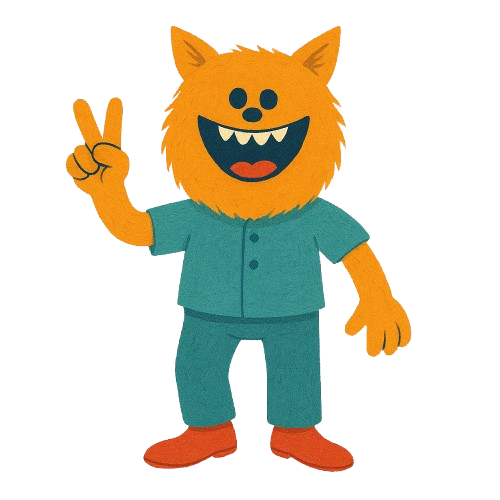
Singing
Familiar songs and vocal play encourage speech, breath control, and confidence — even for participants who rarely speak.
What is music therapy?
Music therapy is the intentional use of music to support physical, emotional, cognitive, and social needs. It works because rhythm and melody engage the whole brain — and because everyone can participate at their own level.
The basics
Music therapy is not about performing or learning to read notes. A session is built around what a participant can already do, then gently stretches from there — matching a beat, holding a shaker, adding a word to a song, or simply listening in a room that feels safe.
Because music activates memory, motor control, language, and emotion all at once, it can create moments of connection that other approaches struggle to reach. A person who is nonverbal may sing. A person who avoids groups may drum in one.
A note on our programs: Unique Melodies runs inclusive, music-therapy-inspired group sessions led by trained youth volunteers. Our sessions are community programs, not clinical treatment, and we are always glad to work alongside a participant's own board-certified music therapist or care team.
In a session
Familiar songs and vocal play encourage speech, breath control, and confidence — even for participants who rarely speak.
Rhythm is instantly accessible. Drumming builds coordination, turn-taking, and a shared pulse the whole group can feel.
Shakers, bells, keyboards, and hand percussion give everyone a voice in the group, whatever their motor abilities.
Clapping, swaying, and guided movement connect body and sound, supporting motor planning and sensory regulation.
Free, unscored playing lets participants lead. There are no wrong notes — only expression.
Carefully chosen music helps with relaxation, focus, memory, and processing emotions safely.
Why it matters
Music offers a way to communicate feelings that are hard to put into words.
Playing in a circle creates eye contact, turn-taking, and genuine friendships.
Steady rhythm can calm anxiety, support attention, and make transitions easier.
Striking, shaking, and strumming build fine and gross motor coordination through play.
Volunteer at an upcoming drum circle, or start a Unique Melodies chapter where you live.